This guide explains how to bleed a radiator in a UK home: how to tell if a radiator has trapped air, what tools you need, each step from switching off the heating to checking the boiler pressure, and what to do if bleeding does not fix the problem.
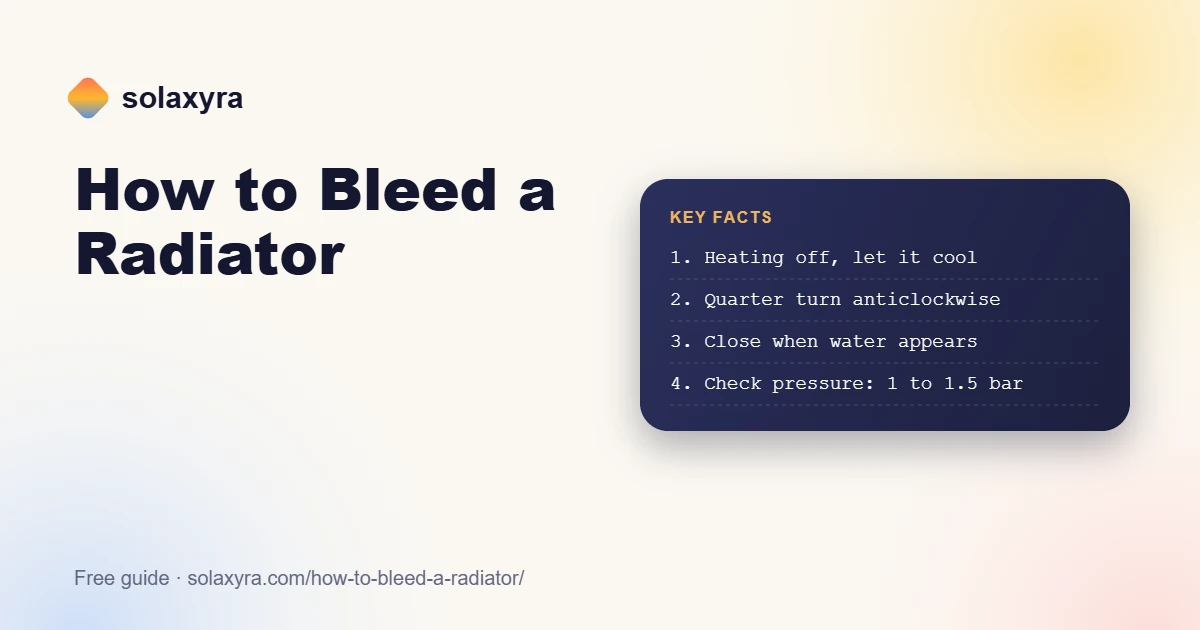
Quick answer: Turn the heating off and let the radiators cool. Hold a cloth under the bleed valve at the top corner, turn it anticlockwise about a quarter turn with a radiator key until air hisses out, and close it as soon as water appears. Then check the boiler pressure and top it up to around 1 to 1.5 bar if it has dropped.
Why do radiators need bleeding?
Air can collect in a central heating system over time, from small leaks, from fresh water added when topping up, or as gases form from corrosion. Air rises to the top of radiators and stops hot water from filling them. The result is a radiator that is cold at the top and warm at the bottom, which wastes energy because the boiler runs longer to heat the room.
Signs a radiator needs bleeding
- The top of the radiator is cold while the bottom is hot.
- Gurgling or tapping noises when the heating comes on.
- Rooms take longer to warm up than usual.
- The whole radiator is cold even though the valves are open, sometimes a sign of a bigger problem.
What you need
- A radiator key, available cheaply from hardware shops. Some newer radiators use a flat-head screwdriver instead.
- An old cloth or towel, and a small container to catch drips.
- Access to your boiler to check the pressure gauge.
How to bleed a radiator step by step
- Turn the heating off and wait until the radiators are cool. Hot water can scald and the system is under pressure when running.
- If you have several radiators to bleed, start with the one furthest from the boiler on the ground floor, then work towards the boiler and upstairs.
- Find the bleed valve, a small square fitting at one top corner of the radiator.
- Hold the cloth under the valve and fit the key.
- Turn the key anticlockwise slowly, about a quarter to half a turn. You should hear air hissing out.
- When water starts to drip out steadily, turn the key clockwise to close the valve. Do not overtighten.
- Repeat for other radiators that need it.
- Check the pressure gauge on the boiler and top up if needed.
- Turn the heating back on and check that the radiators heat evenly.
How do you top up boiler pressure after bleeding?
Bleeding lets out air and a little water, so the pressure in a sealed system, which includes most combi and system boilers, can drop. Most boilers like a cold pressure of around 1 to 1.5 bar; check your boiler’s manual. To top up, open the filling loop valves slowly until the gauge reaches the right level, then close them fully. Our guide to repressurising a boiler covers this in detail. Older open-vented systems with a header tank in the loft refill themselves.
What if bleeding doesn’t work?
- If the radiator is cold at the bottom but warm at the top, sludge may have built up and the system may need a power flush or a chemical clean.
- If one radiator stays cold, check the thermostatic valve; the pin under the head can stick.
- If you need to bleed radiators often, there may be a leak or a fault letting air in. Ask a Gas Safe registered engineer to check the system.
Does bleeding radiators save money?
It can. A radiator full of air gives out less heat, so the boiler has to run longer to reach the thermostat temperature. Bleeding at the start of each heating season is a quick, free way to keep the system efficient. Gas at the October to December 2026 cap is 7.97p per kWh, so a few hours less boiler run time each week soon adds up.
Frequently Asked Questions
How often should you bleed radiators?
Once a year before winter is enough for most homes, or whenever you notice cold spots at the top.
Should the heating be on or off when bleeding radiators?
Off, and the radiators should be cool.
Which radiator should I bleed first?
Start with the one furthest from the boiler on the lowest floor and work towards the boiler.
Why has my boiler pressure dropped after bleeding?
Some water escapes with the air; top it up using the filling loop.
Checked November 2026 by the Solaxyra Editorial Team. Sources: Energy Saving Trust: Heating and hot water, Gas Safe Register: Gas safety advice.