Drying clothes indoors adds moisture to the air. Ventilate the room or use a dehumidifier to avoid condensation and mould.
Formula and breakdown
n/a
n/a
n/a
This tumble dryer vs heated airer cost calculator compares the electricity cost of drying one load of washing in a tumble dryer and on a heated clothes airer. It works for vented, condenser and heat pump dryers and shows the difference per load and per year.
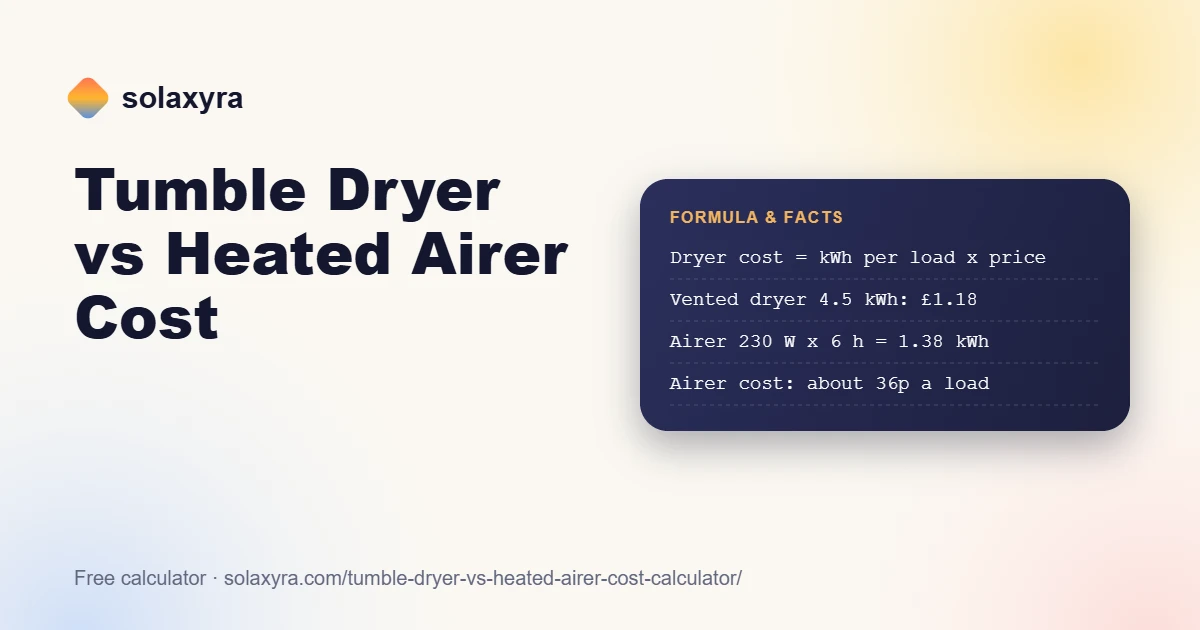
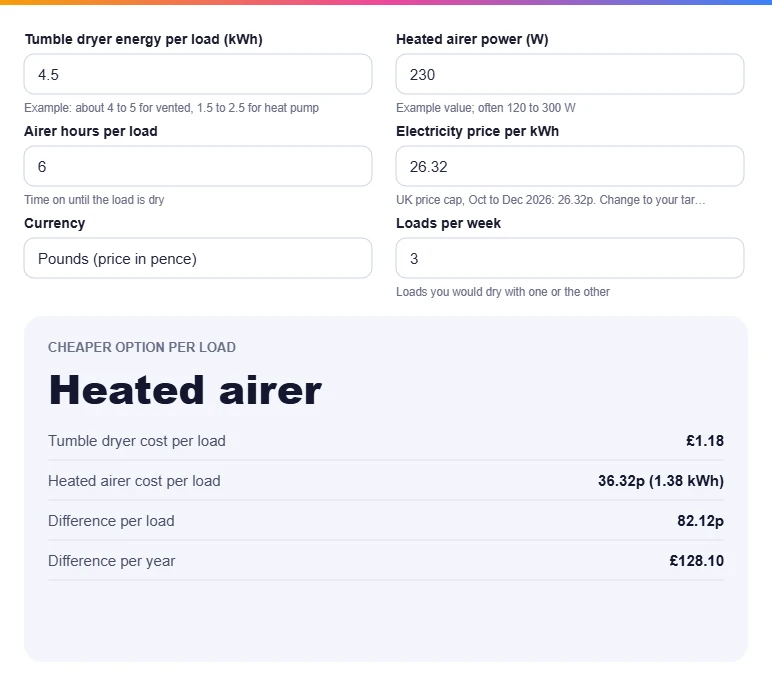
Quick answer: A heated airer is usually cheaper than a vented or condenser dryer but can cost about the same as a heat pump dryer. A 230 W airer on for 6 hours uses 1.38 kWh (36p), while a vented dryer using 4.5 kWh costs about £1.18 a load at 26.32p per kWh.
What Is a Tumble Dryer vs Heated Airer Cost Calculator?
This calculator puts the two most common indoor drying methods side by side. Tumble dryers are usually rated by energy per load, while heated airers are rated in watts, so the calculator converts the airer’s power and running time into kWh before comparing.
How Do You Use the Tumble Dryer vs Heated Airer Cost Calculator?
- Enter your dryer’s energy per load. The energy label gives a yearly figure based on a set number of cycles; your manual may list kWh per programme.
- Enter the airer’s wattage and how many hours it runs per load.
- Check the price per kWh and the loads you dry each week.
Which Costs Less per Load?
Typical figures for a full load at 26.32p per kWh:
| Method | Energy per load | Cost per load | 3 loads a week for a year |
|---|---|---|---|
| Vented tumble dryer | 4.5 kWh | £1.18 | £184.77 |
| Condenser tumble dryer | 4.0 kWh | £1.05 | £164.24 |
| Heat pump tumble dryer | 1.8 kWh | 47.4p | £73.91 |
| Heated airer, 230 W for 6 h | 1.38 kWh | 36.3p | £56.67 |
| Heated airer with cover, 4 h | 0.92 kWh | 24.2p | £37.78 |
Which Dries Better?
A tumble dryer is faster and leaves towels softer, and it can dry a full drum in one go. A heated airer holds less, takes longer and works best with lighter fabrics spread out in a single layer. A cover or a fan nearby can shorten drying time considerably.
The Hidden Cost of Indoor Drying
Drying on an airer releases several litres of water into the room per load. Without ventilation this can lead to condensation and mould. If you need a dehumidifier to cope, include its running cost too. A vented tumble dryer sends the moisture outside.
Ways to Cut Drying Costs
- Spin the wash at the highest speed the fabric allows; less water means less drying.
- Use an outdoor line on dry, breezy days.
- Use the dryer’s sensor programme rather than a fixed time.
- Clean the lint filter after every load.
Worked Example: A Busy Household
Example: a family in Sheffield dries 5 loads a week and is deciding between using an old vented dryer and buying a heated airer.
- Vented dryer: 4.8 kWh a load = £1.26.
- Heated airer at 300 W for 5 hours: 1.5 kWh = 39.5p.
- Difference = 86.8p a load, about £226 a year.
- The airer will only dry about half a load at a time, so they plan to use it for lighter washes and keep the dryer for towels.
Frequently Asked Questions
Is a heated airer cheaper than a tumble dryer?
Usually cheaper than vented or condenser dryers, and similar to a heat pump dryer.
How much does a heated airer cost per hour?
A 230 W airer costs about 6p an hour at 26.32p per kWh.
How much does a tumble dryer cost per load?
Roughly 45p to £1.30 at 26.32p per kWh, depending on the type and load.
Can you leave a heated airer on overnight?
Many are designed for long use, but follow the manual and keep the room ventilated.
Checked November 2026 by the Solaxyra Editorial Team. Sources: Ofgem: Energy price cap, 1 October to 31 December 2026, Energy Saving Trust: Home appliances.