Generator
Home battery
Bar shows the share of each power cut the battery covers. Costs in pounds, as entered.
Formula and breakdown
n/a
n/a
n/a
This generator vs battery cost calculator compares the full cost of keeping essential appliances running through power cuts with a petrol generator or a home battery, over the number of years you choose, for households in the UK and Europe. It adds purchase, installation, fuel or recharging, servicing and replacement, and also shows how much of each power cut the battery can actually cover, which a cost total on its own hides.
Quick answer: A generator vs battery cost calculator adds purchase, install, fuel or recharge and servicing over several years. Example: a 500 W essential load, three 6 hour cuts a year, petrol at 174.57p per litre and a £4,600 5 kWh battery bought only for backup give about £1,862 for a generator against £4,626 for the battery over 10 years.
What Is a Generator vs Battery Cost Calculator?
A generator vs battery cost calculator is a tool that totals what each backup option costs to own and run over the same period and the same power cuts, so the two can be compared fairly. In plain words: generator cost equals purchase price times the number you buy in the period, plus installation, plus each year’s fuel and servicing. Battery cost equals installed price times the number you buy, plus each year’s recharging, minus any bill savings the battery earns between power cuts.
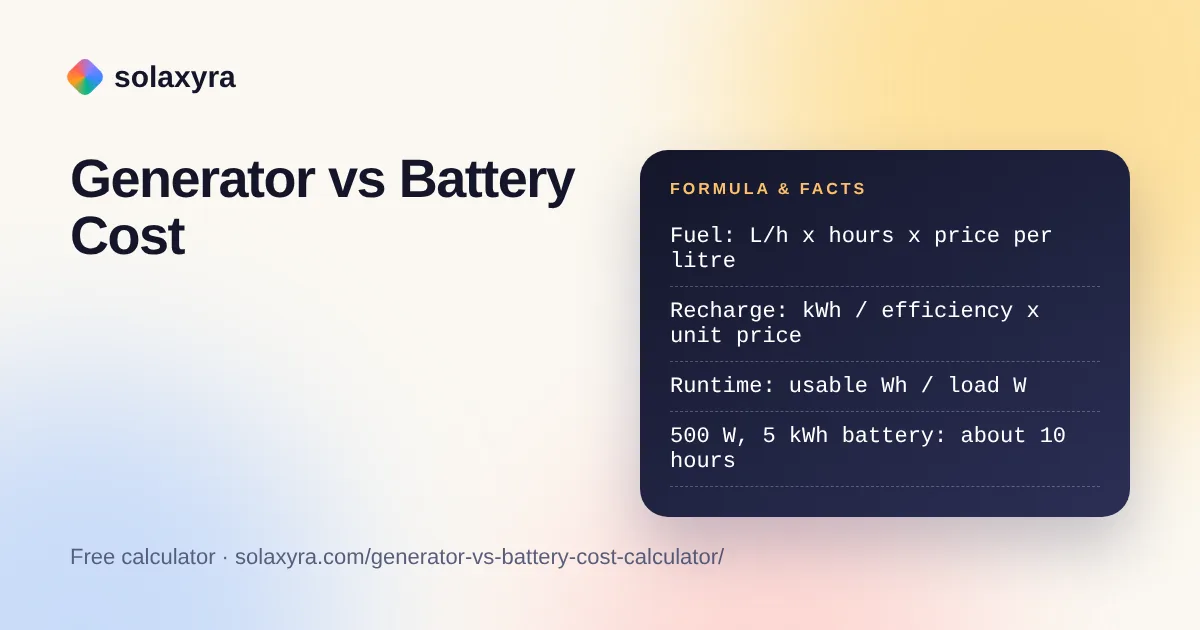
Fuel per year is litres per hour at your load times the hours run, including short test runs, times the pump price. Recharge cost is the energy the battery delivered divided by its round-trip efficiency, times your electricity unit price.
How Do You Use the Generator vs Battery Cost Calculator?
- Enter the essential load in watts you want to keep on during a power cut, for example a fridge, boiler controls, lights and a router.
- Enter how long a typical power cut lasts in your area and how many you expect each year, then the number of years to compare.
- Enter the generator price and the quote for a changeover switch, the fuel use at your load from the generator’s manual, the fuel price, test running hours and servicing.
- Enter the battery’s installed price from your quote, its usable capacity, round-trip efficiency and your electricity price.
- If the battery will also cut your bills every day, enter that yearly saving. The generator vs battery cost calculator then shows the cheaper option, the totals and the share of each power cut the battery covers.

Is a Generator or a Home Battery Cheaper for Backup Power?
For backup alone, a portable generator is usually far cheaper: in the default example it costs about £1,862 over 10 years against £4,626 for a battery, because the generator’s purchase price is much lower and three short power cuts a year use little fuel. The battery only closes the gap when it also earns money every day, for example by charging on a cheap overnight tariff or storing solar power.
The Energy Saving Trust’s battery storage advice gives home battery costs from £1,500 to £10,000, with a 5 kWh system at around £4,600, and a typical lifespan of about 10 to 12 years. Generator prices vary too widely to quote as fact, so the generator figures in the generator vs battery cost calculator are example values to replace with your own quotes. You can model the daily savings side with the home battery savings calculator and paste the yearly figure into the savings box.
How Long Will a Home Battery Last in a Power Cut?
A battery’s runtime in hours is its usable capacity in kWh times 1,000 divided by the load in watts, so a 5 kWh battery runs a 500 W load for about 10 hours. Double the load and the runtime halves. A generator runs for as long as you can keep refuelling it.
This is why the generator vs battery cost calculator reports coverage as well as cost. In a 24 hour cut the same battery covers only 42% of the time unless it can recharge from solar panels, while the generator keeps going. Not every battery can supply the house during a cut: it needs a backup or emergency power function and the right wiring, so check this with the installer. For a quick runtime check on a single appliance, use the battery runtime calculator, or the power station runtime calculator for a portable unit.
How Much Does It Cost to Run a Generator in a Power Cut?
A generator using 0.5 litres of petrol an hour costs about 87p an hour to run at the UK average pump price of 174.57p per litre for the week of 19 October 2026, published in the DESNZ weekly road fuel prices. A 6 hour cut therefore costs about £5.24 in fuel. Fuel use depends on the model and how hard it is working, so take the litres per hour figure from your generator’s manual, or estimate it with the generator fuel consumption calculator.
Long cuts change the picture. A 72 hour cut at 1.5 litres an hour needs 108 litres, far more than most homes can store. The HSE allows up to 30 litres of petrol at home without telling the local Petroleum Enforcement Authority, in plastic containers of up to 10 litres or metal containers of up to 20 litres, and never in living accommodation. The calculator warns when one cut needs more than 30 litres.
| Scenario (example values) | Generator total | Battery total | Battery covers |
|---|---|---|---|
| 500 W, three 6 h cuts a year, 10 years, backup only | £1,862 | £4,626 | 100% |
| 500 W, one 24 h cut a year, 15 years, battery saves £250 a year | £2,971 | £5,472 | 42% |
| 3 kW, two 72 h cuts a year, 1.5 L/h, 13.5 kWh battery at £9,000, 20 years | £10,970 | £18,158 | 6% |
Every row was run through the generator vs battery cost calculator with example prices and life spans with petrol at 174.57p per litre and electricity at 26.32p per kWh, the Ofgem price cap for 1 October to 31 December 2026. Replacements are counted when the period is longer than the stated life.
Is It Safe to Use a Generator or Battery for Home Backup?
Run a petrol or diesel generator outdoors only, well away from doors and windows, because the NHS lists portable generators among the causes of carbon monoxide poisoning and warns against running engines in enclosed spaces such as a garage. Fit a carbon monoxide alarm indoors.
Never plug a generator into a household socket to feed the house. Connection to fixed wiring needs a changeover switch or inlet installed by a qualified electrician to BS 7671, which isolates the house from the grid so power cannot flow back into the network where engineers expect the lines to be dead. A home battery must likewise be installed by a qualified installer and electrician; in England and Wales notifiable electrical work also falls under Part P of the Building Regulations.
Worked Example: Rural Cottage Keeping the Essentials On
Example: a rural cottage in Cumbria wants to keep a 500 W essential load running through about three 6 hour power cuts a year and compares options over 10 years with the generator vs battery cost calculator. The generator quote is £600 with £400 for a changeover switch; it burns 0.5 litres an hour and is test run for 12 hours a year with £60 of servicing. The battery quote is £4,600 for 5 kWh usable at 90% round-trip efficiency.
- Energy per cut: 500 W x 6 h = 3 kWh. The battery runs for 5,000 / 500 = 10 hours, so it covers the whole cut.
- Generator fuel a year: 0.5 x (18 + 12) hours = 15 litres x £1.7457 = £26.19, plus £60 servicing = £86.19.
- Generator total: £600 + £400 + 10 x £86.19 = £1,862.
- Battery recharge per cut: 3 kWh / 0.9 x £0.2632 = £0.88, or £2.63 a year.
- Battery total: £4,600 + 10 x £2.63 = £4,626. The generator is £2,764 cheaper, but if the battery saved about £277 a year on bills, the two would break even.
Frequently Asked Questions
Is a home battery cheaper than a generator for power cuts?
Usually not for backup alone. A portable generator costs much less to buy and a few short cuts a year use little fuel. A battery becomes the cheaper choice when it also saves money every day, for example by storing solar power or charging on a cheap overnight tariff, which the calculator lets you add.
How long will a 5 kWh battery run my essentials in a power cut?
Divide the usable capacity in watt hours by the load in watts. A 5 kWh battery runs a 500 W essential load for about 10 hours and a 1,000 W load for about 5 hours. Check that the battery has a backup function, because not every system supplies the home during a cut.
How much petrol does a generator use in a power cut?
It depends on the model and load, so use the litres per hour figure in your generator’s manual. Example: a generator using 0.5 litres an hour needs 3 litres for a 6 hour cut, about £5.24 at the UK average petrol price of 174.57p per litre in October 2026.
Can I plug a generator into a wall socket to power my house?
No. Feeding a house through a socket is dangerous and can send power back into the network. A generator must connect through a changeover switch or inlet fitted by a qualified electrician to BS 7671, or you run appliances directly from the generator’s own outlets outdoors.
How much petrol can I store at home for a generator?
The HSE allows up to 30 litres of petrol at home or non-workplace premises without notifying the Petroleum Enforcement Authority, in suitable containers of up to 10 litres for plastic or 20 litres for metal. Petrol must not be stored in living accommodation.
Does the generator vs battery cost calculator include replacements?
Yes. If the period you compare is longer than the life you enter for either option, the calculator adds another purchase. The Energy Saving Trust gives a typical home battery lifespan of about 10 to 12 years; the generator life is an example value to change.
Checked October 2026 by the Solaxyra Editorial Team. Sources: Energy Saving Trust: solar battery storage, DESNZ weekly road fuel prices (gov.uk), Ofgem: energy price cap 1 October to 31 December 2026, HSE: petrol storage at home and non-workplace premises, NHS: carbon monoxide poisoning, Wikipedia: Transfer switch.