This guide explains why your electricity bill may be so high and how to check each possible cause, from billing problems such as estimated readings to everyday habits, seasonal heating and appliances that use more than they should.
Quick answer: The most common reasons are estimated meter readings, winter heating with electric heaters, a tumble dryer or electric shower used more often, a price rise, a direct debit set too high or too low, and faulty or very old appliances. Compare your actual meter readings with the bill first, then look for a change in what you use.
Start with the bill itself
Before looking at appliances, check that the bill is right.
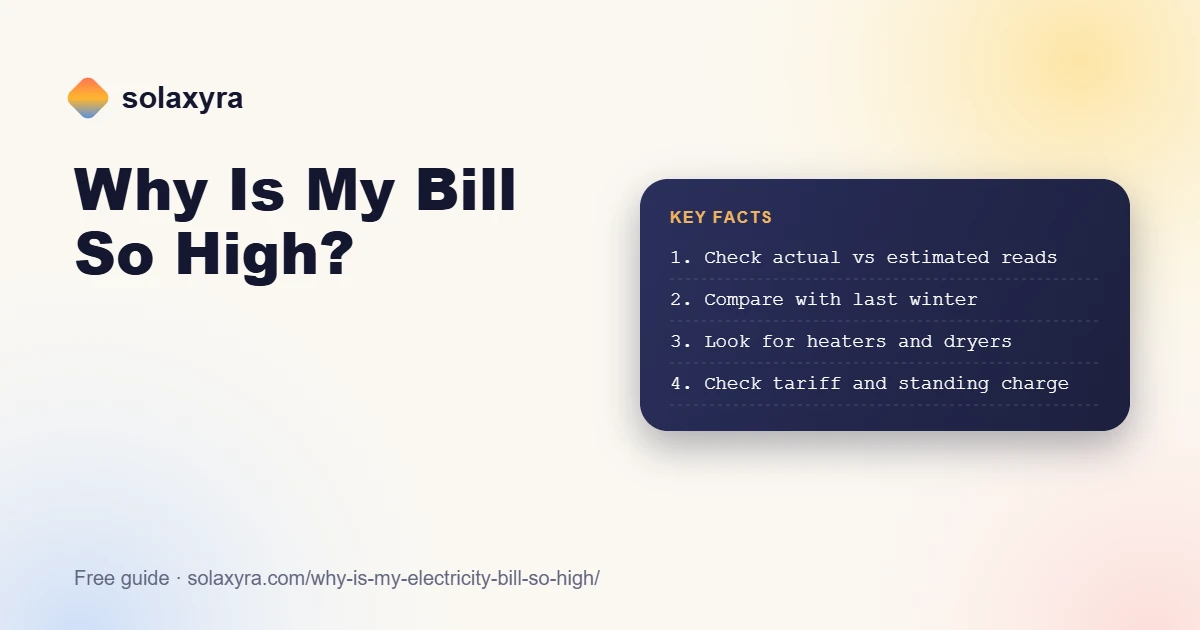
- Look for the word estimated next to readings. Estimated bills can be far too high or too low.
- Read your meter and compare it with the bill. Submit a reading if it does not match.
- Check the unit rate and standing charge against your tariff. Under the October to December 2026 cap, the GB average is 26.32p per kWh and 54.83p a day for direct debit.
- Check the billing period. A bill covering more days than usual will be higher.
10 common reasons for a high electricity bill
- Estimated readings that have overestimated your use.
- A catch-up bill after months of underestimated readings.
- Electric heating in winter. A 2 kW heater for 4 hours a day costs about £2.11 a day.
- More tumble drying in wet weather.
- An electric shower used longer or more often.
- Price changes. The price cap changes every quarter.
- More people at home, such as working from home or school holidays.
- Old fridges, freezers or fridge-freezers using far more than modern ones.
- Faults, such as an immersion heater left on constantly or a thermostat that has failed.
- Standby and always-on devices such as consoles, computers and set-top boxes.
How much do common culprits cost?
At 26.32p per kWh:
| Appliance and use | Energy | Cost |
|---|---|---|
| 2 kW heater, 4 hours a day for 30 days | 240 kWh | £63.17 |
| 3 kW immersion heater left on for 24 hours by mistake | up to 72 kWh, if it never reaches temperature | up to £18.95 |
| Vented tumble dryer, 5 loads a week for a month | about 97 kWh | about £25.53 |
| 9.5 kW electric shower, 4 × 10-minute showers a day for a month | 190 kWh | £50.01 |
How do you find out what is using the electricity?
- Use a smart meter display. Switch things off one by one and watch the live reading.
- Use a plug-in energy monitor on individual appliances.
- Read the meter at night before bed and in the morning to see your overnight base load.
A typical overnight base load from fridges, routers and standby is often 100 to 300 W. A much higher figure points to something left on or a faulty appliance.
What if the bill still looks wrong?
Contact your supplier with your meter readings and ask them to check. If you are not happy with the reply, you can complain formally, and after 8 weeks, or sooner if the supplier sends a deadlock letter, you can take it to the Energy Ombudsman.
Frequently Asked Questions
Why has my electricity bill doubled?
Often a catch-up after estimated readings, a new electric heater or a big change in use; check readings first.
Can a faulty meter cause a high bill?
It is rare, but possible. Your supplier can test the meter if you suspect a fault.
Why is my bill higher in winter?
Longer lighting hours, more tumble drying, more time indoors and any electric heating.
How do I check my base load?
Note the smart meter reading overnight with everything you can switch off turned off.
Checked November 2026 by the Solaxyra Editorial Team. Sources: Ofgem: Energy price cap, 1 October to 31 December 2026, Ofgem: Problems with your energy bills, Energy Ombudsman.