A diverter and immersion heater are mains electrical work: they must be fitted by a qualified electrician, in the UK to BS 7671.
Formula and breakdown
n/a
n/a
n/a
This solar diverter calculator works out whether sending surplus solar electricity to your hot water cylinder's immersion heater saves money compared with exporting it, for homes in the UK and Ireland with solar panels and a hot water cylinder. It estimates how much surplus the cylinder can actually absorb, the gas, electricity or oil it replaces, the export income you give up, the break-even export rate and the payback of the diverter.
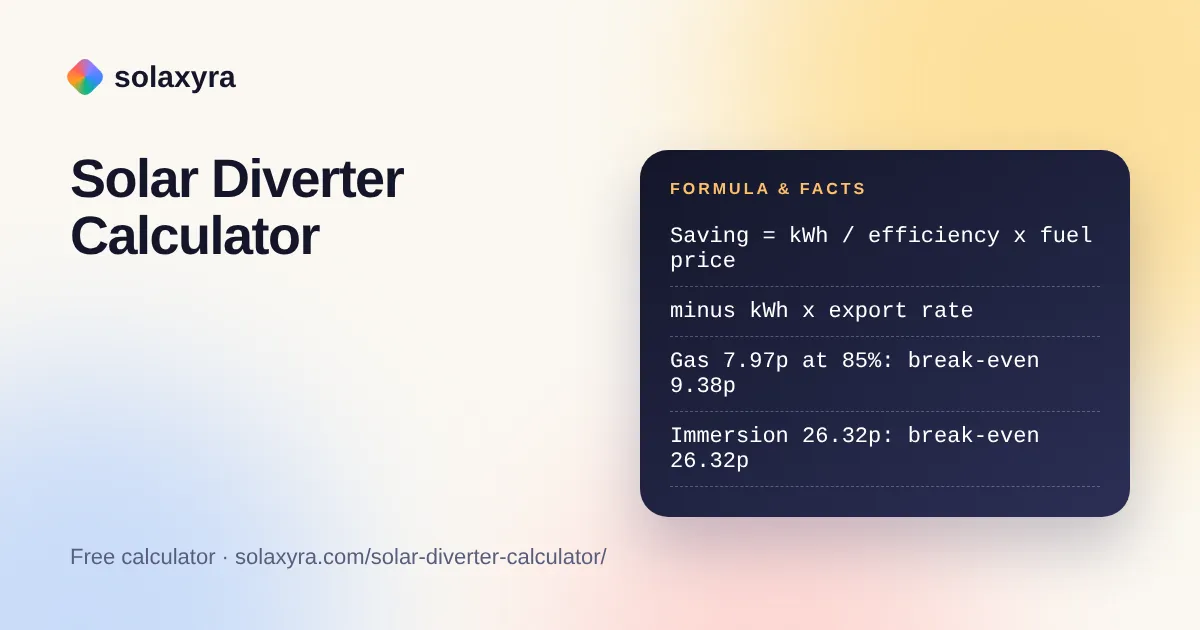
Quick answer: A solar diverter calculator compares two values for each surplus kWh: the fuel it replaces (fuel price / heater efficiency) and the export payment you lose. Replacing gas at 7.97p and 85% efficiency saves 9.38p per kWh, less than a typical 12p export rate. Replacing an electric immersion at 26.32p saves far more.
What Is a Solar Diverter Calculator?
A solar diverter calculator is a tool that estimates the yearly saving from a solar PV diverter, the device that sends electricity your panels would otherwise export to an immersion heater instead. In plain words: every kWh diverted becomes about 1 kWh of heat in the cylinder, so you avoid buying the fuel that would have made that heat, but you no longer get paid for exporting it.
The formulas are: hot water heat per year = (litres a day x temperature rise x 1.1622 Wh + cylinder loss) x 365; diverted energy = the smaller of the surplus the diverter catches and the share of hot water heat solar can cover; net saving = diverted kWh / heater efficiency x fuel price minus diverted kWh x export rate.
How Do You Use the Solar Diverter Calculator?
- Choose how you heat water now: gas boiler, electric immersion, or oil, LPG or another fuel.
- Enter the solar electricity you export in a year, from your export meter or inverter app, and the share a diverter would catch.
- Enter your hot water use in litres a day, the cold and cylinder temperatures and the cylinder heat loss from its label.
- Set the largest share of the year's hot water heat that solar could cover, which allows for short winter days.
- Check the fuel price, heater efficiency and your export rate.
- Enter the fitted cost of the diverter for the payback.

Is a Solar Diverter Worth It With a Gas Boiler?
Often not, if you are paid a typical export rate: with gas at the Ofgem cap of 7.97p and a boiler at 85% efficiency, a diverted kWh saves 9.38p of gas, while exporting it earns about 12p. The Ofgem price cap for 1 October to 31 December 2026 sets gas at 7.97p and electricity at 26.32p per kWh for direct debit customers, and the Energy Saving Trust's solar panel advice says you typically get around 12p for each unit exported through the Smart Export Guarantee.
So the answer depends on the export rate. A diverter beats exporting when your export rate is below the break-even rate, which is the fuel price divided by the heater efficiency. With no export payment, a low fixed rate, or an immersion heater as the current water heating, the saving is real.
| Export rate you would lose | Replacing gas boiler (7.97p, 85%) | Replacing electric immersion (26.32p) | Replacing oil or LPG (example 10p, 85%) |
|---|---|---|---|
| 0p (no export payment) | £126.58 | £355.32 | £158.82 |
| 5p | £59.08 | £287.82 | £91.32 |
| 12p | minus £35.42 | £193.32 | minus £3.18 |
| 15p | minus £75.92 | £152.82 | minus £43.68 |
| Break-even export rate | 9.38p | 26.32p | 11.76p |
Net yearly saving for 1,350 kWh diverted (1,500 kWh surplus, 90% caught, within a 50% cap on 2,910 kWh of hot water heat). Export rates other than 12p, the oil price and boiler efficiency are example values; enter your own.
How Much Solar Surplus Can a Hot Water Cylinder Use?
A cylinder can only take as much heat as you use plus what it loses: 120 litres a day heated by 50 °C needs about 2,545 kWh a year, plus around 365 kWh if the cylinder loses 1 kWh a day. Heating 1 litre of water by 1 °C takes 1.1622 Wh, from the specific heat of water of 4,184 J per kg per kelvin given in the Wikipedia article on specific heat capacity.
Solar surplus is large in summer and small in winter, so only part of that heat can come from the panels. For comparison, the Energy Saving Trust says solar thermal water heating typically provides about half of a home's hot water over a year, around 90% in summer and 25% in winter. Our 50% example limit follows that pattern; a diverter fed by PV may manage more or less. Once the cylinder reaches its thermostat setting, any further surplus is exported anyway.
To find your real surplus, the solar self-consumption calculator estimates how much of your generation you use and how much you export.
Should I Choose a Diverter or a Battery?
A battery stores surplus as electricity, which is worth the full import price when used later, while a diverter stores it as heat, which is only worth the fuel it replaces. If your water is heated by gas, the heat is worth about 9.38p per kWh; electricity from a battery replaces imports at around 26.32p before battery losses. A battery costs far more to buy, so compare both with the home battery savings calculator.
The two can work together. Where both are fitted, setting the battery to charge first and the diverter to take only what is left keeps the higher-value use first, so the cylinder gets surplus that would otherwise be exported.
Does My Home Suit a Solar Diverter?
A home suits a hot water diverter only if it has a hot water cylinder fitted with an electric immersion heater, because that element is where the diverted electricity goes. A home with a combi boiler and no cylinder has nowhere to store the heat, so a standard hot water diverter cannot help unless a cylinder is added, which is a much bigger job.
- Good fit: a cylinder with an immersion heater, steady daily hot water use, regular summer surplus, and a low or zero export rate.
- Weaker fit: gas-heated water combined with an export rate above the break-even rate the solar diverter calculator shows.
- No fit without changes: a combi boiler with no cylinder, or a cylinder with no immersion heater.
- Check first: some diverters can also send surplus to other loads, such as an electric car charger or a heater; the saving then depends on what those loads would otherwise cost to run.
Who Can Install a Solar Diverter?
A solar diverter must be installed by a qualified electrician, and in the UK the work must meet BS 7671. Fitting one involves connections at the consumer unit and on the immersion heater circuit, which is mains electrical work. The immersion heater and cylinder must keep their thermostat and safety controls working as the manufacturer intends.
Before buying, check with your installer that the immersion heater element and cylinder suit frequent part-power heating, and that your export meter readings, which your Smart Export Guarantee payments depend on, will still be recorded correctly. The Smart Export Guarantee calculator shows what your export currently earns.
Worked Example: A Home Heating Water by Immersion Only
Example: a bungalow in Cork with a 4 kWp array exports 1,800 kWh a year and heats water only with an electric immersion heater. The household uses 100 litres a day heated from 10 °C to 60 °C, the cylinder loses 1.2 kWh a day, and for this example the electricity price is 26.32p, the export rate 12p and the fitted diverter £500.
- Hot water heat: (100 x 50 x 1.1622 / 1,000 + 1.2) x 365 = 2,559 kWh a year.
- Diverted: the smaller of 1,800 x 90% = 1,620 kWh and 2,559 x 50% = 1,280 kWh, so about 1,280 kWh (1,279.5), limited by hot water need.
- Electricity avoided: 1,279.5 x 26.32p = £336.77.
- Export given up: 1,279.5 x 12p = £153.54.
- Net saving £183.23 a year; payback 500 / 183.23 = 2.7 years.
Prices in Ireland differ from the GB cap, so in practice the household would enter its own tariff and export rate.
Frequently Asked Questions
How does a solar diverter work?
It measures the current flowing to or from the grid and, when the panels produce more than the home uses, sends that surplus to the immersion heater instead of exporting it. It varies the power to match the surplus, and stops when the cylinder thermostat is satisfied, after which the surplus is exported as before.
Is a solar diverter worth it if I have gas central heating?
Only if your export rate is lower than the gas cost it replaces. At 7.97p per kWh and 85% boiler efficiency, each diverted kWh saves 9.38p, so with a typical 12p export rate exporting earns more. With no export payment, or a rate below 9.38p, a diverter saves money.
How much can a solar diverter save a year?
Savings depend on surplus, hot water use and what you pay for heat and export. In this solar diverter calculator's example, 1,350 kWh diverted saves £193 a year net when replacing an electric immersion at 26.32p with a 12p export rate, but loses about £35 a year when replacing gas.
What is the break-even export rate for a diverter?
It is the cost of the heat you replace: fuel price divided by heater efficiency. For gas at 7.97p and 85% that is 9.38p per kWh; for an electric immersion at 26.32p it is 26.32p. If you are paid more than this to export, exporting is worth more than diverting.
Can I fit a solar diverter myself?
No. A diverter is connected to your consumer unit, supply cable and immersion heater circuit, which is mains electrical work. It must be installed by a qualified electrician, and in the UK the installation must meet BS 7671 and be certified as required.
Does a diverter work in winter?
Only on days when the panels produce more than the home uses, which in winter is rare and brief. Most diverted energy arrives from spring to autumn, so a diverter usually covers only part of the year's hot water, and your boiler or immersion still does the rest.
Checked October 2026 by the Solaxyra Editorial Team. Sources: Ofgem: price cap 1 October to 31 December 2026, Energy Saving Trust: solar panels and SEG, Energy Saving Trust: solar water heating, Wikipedia: Specific heat capacity.